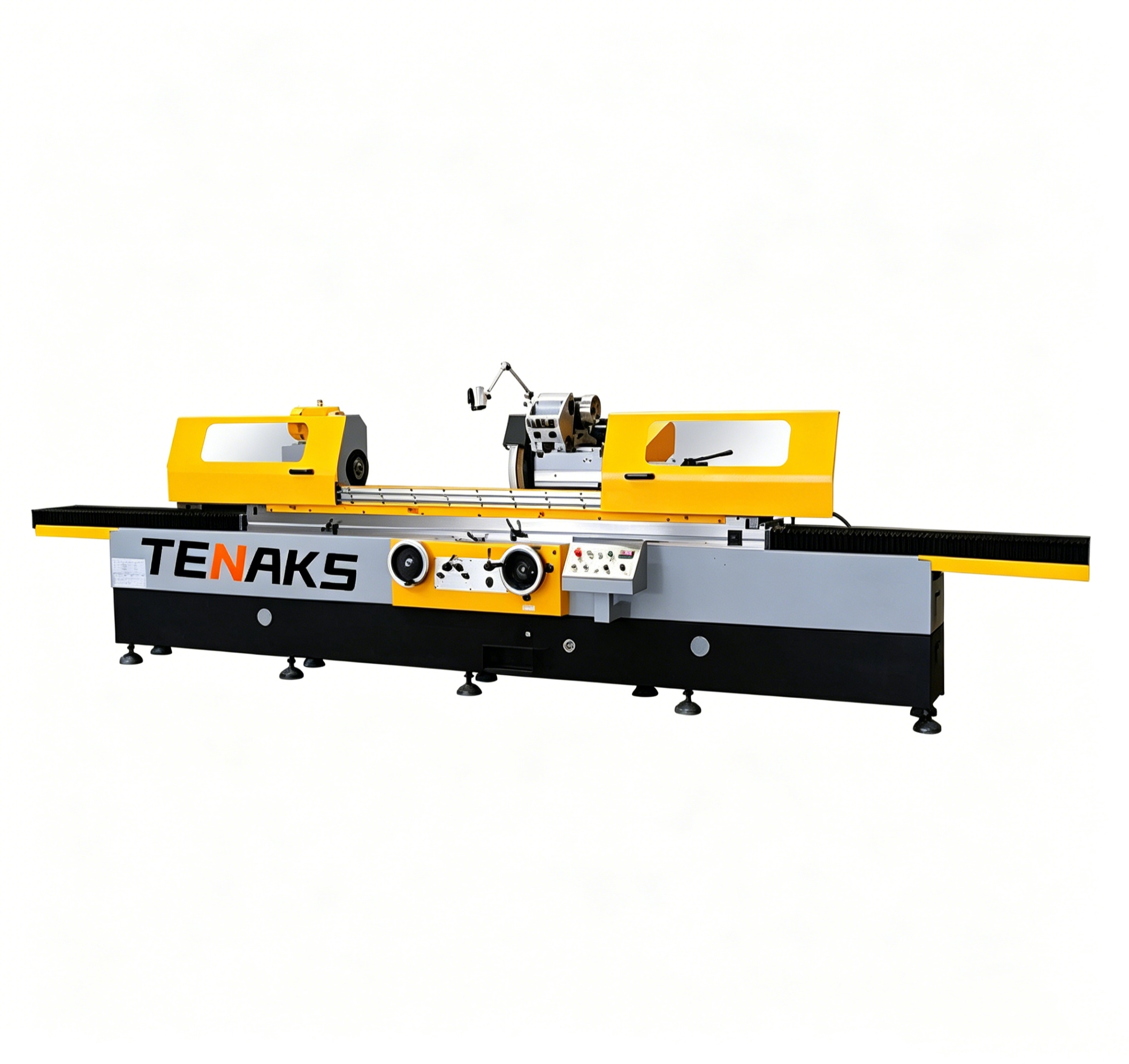
Cylindrical grinders are among the most common types of grinding machines, widely used in industrial manufacturing. Based on different grinding wheel movements, cylindrical grinders are divided into three categories: plunge grinders, face grinders, and standard cylindrical grinders. These three types help users improve processing efficiency and achieve better workpiece finishing.
Workpieces produced in factories often have surface imperfections, and we can use grinding machines to give them a "cosmetic finish" while boosting overall processing efficiency. A smooth, flat outer surface is critical for components, as it directly improves product quality and market competitiveness. That is why cylindrical grinders are widely used to create smooth external surfaces — essentially providing a "beauty treatment" for machined parts.
Cylindrical grinders can be classified into three basic types, each suitable for different production applications:
Plunge cylindrical grinders are generally used for workpieces with a small outer diameter, performing transverse grinding to improve surface smoothness. They are the most common and affordable among the three types.
The working principles of external and internal grinders are similar: one processes the outer surface of a workpiece, while the other processes the inner surface. Compared with internal grinders, which require circular motion, cylindrical grinders are more labor-saving and efficient.
Face cylindrical grinders can smooth both the outer surface and the edges of workpieces, making them ideal for conical surfaces. They are highly efficient for batch grinding and help save production time.
We hope this helps you gain a better understanding of this equipment.
In fact, cylindrical grinders offer faster material removal and surface finishing than internal grinders, making them suitable for a wide range of workpieces. Both types are commonly used for large components, and their combined use greatly improves overall grinding efficiency.